
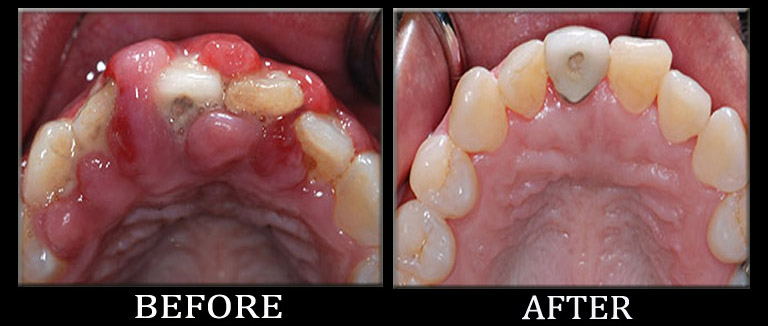
Also known as periodontal diseases.
These bacterial infections can basically destroy your gums as well as the supporting bone that holds your teeth in your mouth. The result of extreme, untreated periodontal disease is teeth that loosen and fall out, or need to be removed and replaced with dental bridges or implants.
Additionally, you may require periodontal plastic surgery to cover and protect exposed tooth root surfaces, correct gum and jawbone indentations or reshape and repair the gum tissue. You may also require dental implants to replace destroyed tooth roots.
Additionally, periodontal disease has been linked to a number of health problems that extend far beyond your mouth including diabetes and heart disease.
Put simply, periodontal disease is entirely preventable through good dental habits. Additionally, periodontal disease is repairable through good dental habits.
You may have gum disease and not even know it. Often, there is no pain and periodontal diseases may not exhibit symptoms until serious bone loss has taken place. It is critical to see Dr. Palak of OM Hospital if you are experiencing any of these symptoms.
Factors that can affect the health of your gums:
Dental Issues. Decayed teeth, broken or badly fitting partial dentures, crowded/crooked teeth and improperly filled teeth can “trap” the built up plaque, making it difficult to remove by at home brushing and flossing.
Health Problems. People with diseases such as diabetes and leukemia, on certain medications or with systemic conditions such as human immunodeficiency virus (HIV) infection, malnutrition or immunosuppression, may be especially vulnerable to gum disease due to lower resistance levels.
Lifestyle Issues. Poor personal oral health practices such as smoking, drug and/or alcohol abuse, and even oral piercings can contribute to periodontal disease. Additionally, stress and poor nutritional habits can weaken your body’s ability to fight off the infections that cause periodontal disease.
Hormonal Factors. Hormonal fluctuations during a woman’s key life stages – puberty, pregnancy and menopause – can trigger tissue changes in the mouth, thus increasing the possibility that a woman will develop periodontal disease.
Genetics. Genes and family history can indicate a predisposition for developing periodontal diseases.
Tobacco Use. Tobacco use is a serious contributor to periodontal disease. Continued tobacco use after periodontal treatment can impeded the healing process and diminish the likelihood of success. Smokeless tobacco is also a danger – users of this form of tobacco are at higher risk of developing oral cancer. Medications. Certain medicines such as oral contraceptives, antidepressants and some heart medicines can adversely affect your gum health.
Copyright 2026 © Om Hospital. All Rights Reserved | Design By : 